

America Against Itself
Hegel once wrote that contradiction is the root of all movement and vitality. Nothing changes without tension. Identity emerges through contrast, tension, and limitation, not through a pure, undisturbed essence. Negation is not destruction. It shapes, clarifies, and gives form.
Carl Marx developed this idea further, arguing that societies do not evolve through harmony but through contradictions rooted in material conditions. Class struggle is not a deviation from progress. It is the mechanism by which progress occurs.
A dialectical society understands and shape itself through conflict. It does not imagine social life as stable and harmonious. Instead, it sees contradiction as permanent and productive. Inequality, conflict, and competing interests are not “bugs” but the engine of change. In such a society, social groups, classes, institutions, ideologies, and identities are in continuous dynamic tension, pushing against one another. When these tensions intensify, when the story a society tells about itself stops working, when institutions weaken, when technology reshapes social life, and when crises force changes that once seemed unthinkable, transformation follows.
Over the past few years, especially during the Trump years, I’ve found myself returning to a recurring question: is Trumpism evidence that the United States has become a dialectical society? The short answer, according to most scholars, is no. Trumpism did not create a dialectical society. The longer and more interesting answer is that it emerged from one.
The United States tells an interesting story about itself. It is a democracy forged by the people, devoted to freedom, and often imagined as destined to lead. This mythology is powerful and emotionally durable. But beneath it lies a set of contradictions so deep that they increasingly define American political life. Trumpism did not invent these tensions. It emerged from them, gave them a voice, a style, and a face, and learned how to exploit them.
Let’s take democracy. America proclaims government “of, by, and for the people,” yet political power is increasingly concentrated among the wealthy. Elections still function, but policy is shaped by corporate interests, lobbying networks, dark money, and elite access. The result is a system that speaks the language of popular sovereignty while decision making quietly defers to money. This contradiction produces a chronic legitimacy crisis that periodically erupts into populist anger, which institutions sometimes manage to absorb and sometimes channel into reactionary revolt.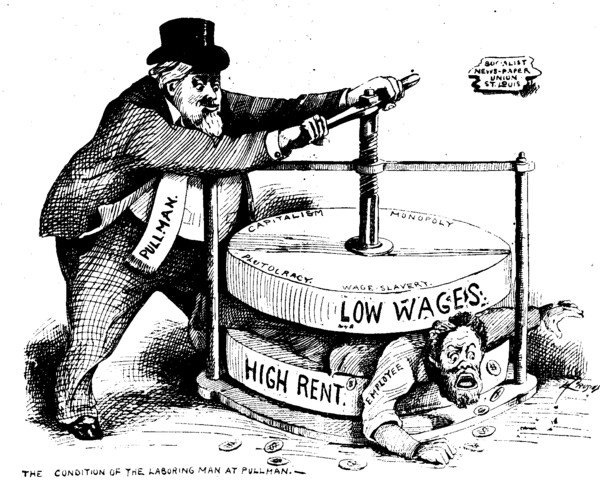
Freedom forms the second pillar of the national creed. Americans are taught to prise individualism and self-reliance, to treat autonomy as both virtue and a personal responsibility. Yet the American economic system makes independence increasingly difficult. Medical debt, insecure work, unaffordable housing, and lifelong student loans are not failures of the system; they are how it functions. The culture demands self-sufficiency while denying the material conditions that make it possible. Resentment follows and is often redirected toward migrants, the poor, or distant elites, becoming fertile ground for punitive politics.
Race exposes another enduring contradiction. Officially, the United States claims to be colorblind, that the civil rights era settled the question of equality. In practice, racial hierarchy remains embedded in incarceration, policing, housing, education, and wealth accumulation. Institutions generate racialised outcomes while public debate circles endlessly around whether racism still exists. Politics becomes a culture war over language and symbols, while structural inequality persists largely intact.
Externally, the contradictions grow sharper still. U.S. officials continue to invoke the “rules‑based international order” as something America defends, even as its authority to define that order declines in a multipolar world. Under Trump, that claim becomes more difficult to sustain, as his administration’s unilateral and transactional approach challenges the very framework that U.S. once championed.
At the same time, internally, infrastructure decays, governance repeatedly breaks down, and media ecosystems fracture into hostile realities. Government shutdowns, judicial warfare, and legislative paralysis coexist with expansive ambitions abroad.
Even the future is structured by conflict. Political leaders praise innovation and climate responsibility, yet daily life stays locked into fossil fuels. Energy lobbies, suburban design, and cheap energy politics undermine any commitments officials profess. The result is policy reversal, culture wars over basic science, and a climate clock that moves faster than reform. Under Trump, the system doubles down, deepening long term fossil fuel dependence, intensifying culture war theatrics, and leaving even less time on the climate clock.
This is the social terrain in which Trumpism takes shape. Scholars who analyse Trumpism through a dialectical lens are careful on this point. Political theorist David Lebow argues that Trumpism grows out of contradictions within neoliberal capitalism itself. The 2008 financial crisis exposed the fragility of debt-driven growth and the illusion of endless consumption. When promises collapsed, people withdrew into echo chambers and rigid identities. The reaction was predictable: polarisation, resentment, and the erosion of shared reality.
Others emphasize symbolism. Anthony Curtis Adler describes Donald Trump as a “dialectical image” of neoliberal society, an embodiment of its contradictions around risk, theatrics, and the fetishisation of entrepreneurship. Trump does not resolve tensions, he performs them. Conflict becomes personal style, branding, and political identity.
From this perspective, Trumpism operates within a dialectical society. It intensifies economic, cultural, and informational contradictions. It feeds on antagonism, thrives on polarisation, and transforms conflict into identity. But it does not create the dialectic. The dialectic was already there.
Trumpism is best understood as a symptom, an accelerator, and an exploiter of unresolved structural tensions within American society. The contradictions precede Trump and will outlast him. His movement reveals what happens when a country refuses to confront its own contradictions. The dialectic lies in the system itself. Trumpism is simply one of its most visible and volatile expressions.
Thanks for reading Chronicles of a Liquid Society! This post is public so feel free to share it.
✍️ Written by

Newsletter
Stay updated with new articles.
No comments yet. Be the first to comment!