

The Business of Being a Tradwife
I recently read Economica: A Global History of Women, Wealth & Power by Victoria Bateman, a book that reconstructs the economic history of women whose labour somehow vanished from twelve millennia of recorded history. Bateman’s point isn’t exactly groundbreaking, but it still - unsurprisingly - gets ignored. Economic progress has almost never been the achievement of great men acting alone but a collective enterprise sustained by wives, mothers, daughters, and sisters whose work was indispensable, even when it went unpaid or unrecognised. Wherever women gained more freedom, economies grew richer and more inventive, and wherever that freedom was choked off, stagnation followed close behind.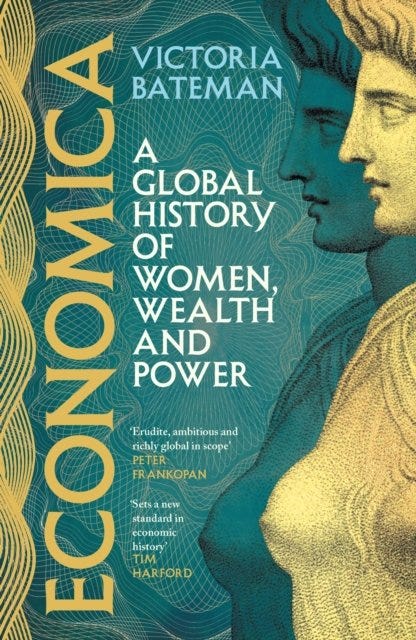
As I finish the book, I found myself thinking not just about how far women have come in the last fifty years, but about how easily that progress can slide backward. Rights acquired over generations can begin to look negotiable with remarkable speed, particularly when they are repackaged as lifestyle choices rather than political questions. That led me to the ‘tradwife’ trend that’s booming across social media, a retro‑fantasy movement that repackages domestic dependence not as a historical constraint but as some kind of timeless ideal.
So, let’s talk a little about the tradwives. Picture a woman somewhere in Utah, dressed like a milkmaid hand-grinding wheat for sourdough while her eight adoring children look on. This is the tradwife, short for “traditional wife,” a content genre built on aprons, scripture, and the gentle suggestion that feminism broke something only a sourdough starter can fix. The aesthetic is unmistakable, a curated vision of femininity that leans toward 1950s housewife cosplay, in soft golden‑hour lighting, a permanent spotless kitchen, and a husband who appears mainly to be fed, or snap a photo. Everything looks idyllic and effortless because the aesthetic depends on convincing viewers that it is.
The Pitch
The tradwife sells a story. That women were happier before careers, before day-care, before the whole ‘effortless perfection’ myth sold as empowerment. It idealises a white, middle-class model of femininity, one that quietly excludes the many women whose experience of domesticity has always been restrictive or the millions of women never had the luxury of choosing domesticity because they were already working in factories, farms, offices, shops, or other people’s homes simply to keep their families afloat. It’s nostalgia for an era that, for most women who actually lived through it, looked far less glossy than the filtered feed makes it look.
TikTok tradwives contribute in normalising far-right, anti-feminist ideologies where women are positioned as naturally subservient and financially dependent to their male partners who hold absolute authority. And here’s the twist no one ever talks about: Tradwife content, argued Jessica Grose in a 2024 New York Times opinion piece, isn’t really for women at all - it’s for men who want submissive wives. The audience watching the bread rise isn’t necessarily dreaming of baking it themselves. Some of them are simply shopping for the fantasy.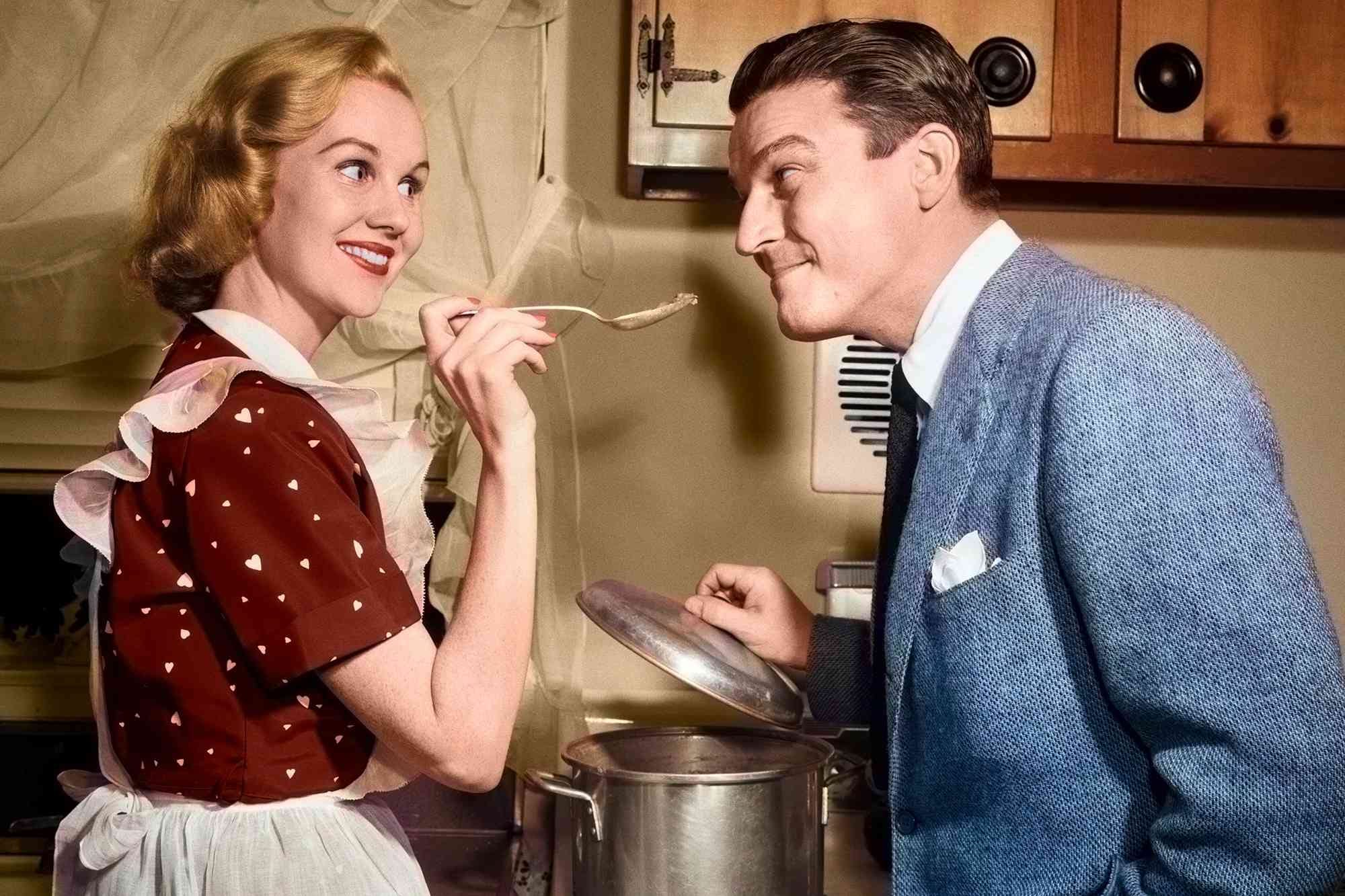
Now here’s the part the milkmaid dress leaves out: tradwifing is, in practice, a job, and a pretty lucrative one if you happen to be near the top. Take Hannah Neeleman of Ballerina Farm for example. A Juilliard-trained dancer, former Mrs. Utah, mother of nine, and the internet’s reigning queen of “simple living.” Her farm sells sourdough starters, and a premium protein powder, among other things and her estimated annual income across platforms runs somewhere around $2 million a year. Her husband, as it happens, is the son of JetBlue’s founder, who has a net worth around $400 million. What they are running is a successful family enterprise. Traditional, sure, but fully incorporated.
The top women influencers preaching domestic submission and financial dependence have substantial financial resources of their own, whether through business ownership, advertising revenue, inherited wealth, or all three. If their marriages failed tomorrow, they would still have substantial savings, income streams, professional networks and, of course, a valuable personal brand. Their followers, who are often encouraged to replicate the aesthetic without any safety net will still have to pay actual rent on actual single modest incomes.
In economic terms the tradwife movement performs a clever trick. It presents itself as a rejection of modern capitalism while relying completely upon the attention economy, advertising revenue, and platform algorithms that only digital capitalism could have created. To put it simply: they’re monetising the rejection of monetisation. It’s a pyramid scheme, but with aprons.
“It’s Just My Choice” - Is It, Though?
Push back on any of these and here’s is where the tradwife gets very clever indeed. She will hand you feminism’s own favourite word: choice. She didn’t fall into submission, she chose it, and isn’t choice the whole point of a hundred years of feminist struggle? It’s a clever rhetorical twist distorting the language of liberation to rebrand its opposite.
Choices are never made in a vacuum. They are shaped by education, wealth, opportunity, family expectations, and the availability of realistic alternatives. More importantly, the women of the 1950s whose lives are now romanticised were rarely offered genuine freedom to choose differently. Many could not open bank accounts independently, obtain credit, or build careers on equal terms. These influencers are selling a carefully edited fantasy and by doing so they are breaking their own rules: the moment a “submissive” wife starts generating affiliate income and brand deals off her submission, she has become financially independent — which is precisely the thing tradwife ideology insists women shouldn’t need to be.
Strip away the linen dresses, the immaculate kitchens, and the cinematic lighting, and what remains is not really freedom but dependence - call it economic bondage dressed up in right‑wing ideology. A woman with no income of her own, no credit history, or employable skills, isn’t “choosing” her husband’s authority. She’s stuck with it, the same way a worker with no other job offers isn’t “choosing” to stay at a bad one.
Bateman’s history dismantles that fantasy, reminding us that women’s exit from economic life was usually forced rather than chosen, and the eras we’re told to romanticise were often the ones paying the highest economic price for it. Nostalgia, it turns out, has an excellent eye for aesthetics, and it’s good for business, but it has an astonishingly poor memory for facts.
Thank you for reading this Old Trouble. If you liked this piece or found it useful, share it, or consider subscribing. Or buy me a virtual coffee as caffeine keeps this whole enterprise running.
Sources:
- TikTok tradwives: femininity, reproduction, and social media
- https://www.nytimes.com/2024/05/15/opinion/tradwife-tiktok.html
- https://en.wikipedia.org/wiki/Hannah_Neeleman
- https://www.celebritynetworth.com/richest-celebrities/authors/hannah-neeleman-net-worth/
- Tradwives: Right-Wing Social Media Influencers
✍️ Written by

Newsletter
Stay updated with new articles.
No comments yet. Be the first to comment!