

The Courage to Remain Yourself
Michel de Montaigne withdrew from the world at the age of thirty-eight, retreating to his tower, surrounded by books, to think, to read, and above all to ask one deceptively simple question: What do I know? He lived in a era of religious violence, sectarian massacre and ideological frenzy, when neighbours murdered neighbours over abstract points of doctrine. Yet his response to this chaos was not a manifesto or a calls to arm, but something quieter, more unwavering and perhaps more radical act: the decision to remain free and faithfully himself.
That determination feels strikingly relevant today, perhaps more than we would like to admit. We live in an era that has rediscovered, to its cost, just how fragile the freedoms we once took for granted really are. For a time, it seemed Montaigne’s struggles belonged to a darker chapter of history. We moved freely, spoke freely, and believed ourselves sovereign over our own inner lives. His warnings felt like museum pieces. And then, gradually, and almost without notice, the world shifted. Ideologies hardened. Public discourse grew increasingly narrow. The pressure to conform to whichever collective shouted the loudest returned, dressed in new clothes but carrying the same old instruments of coercion.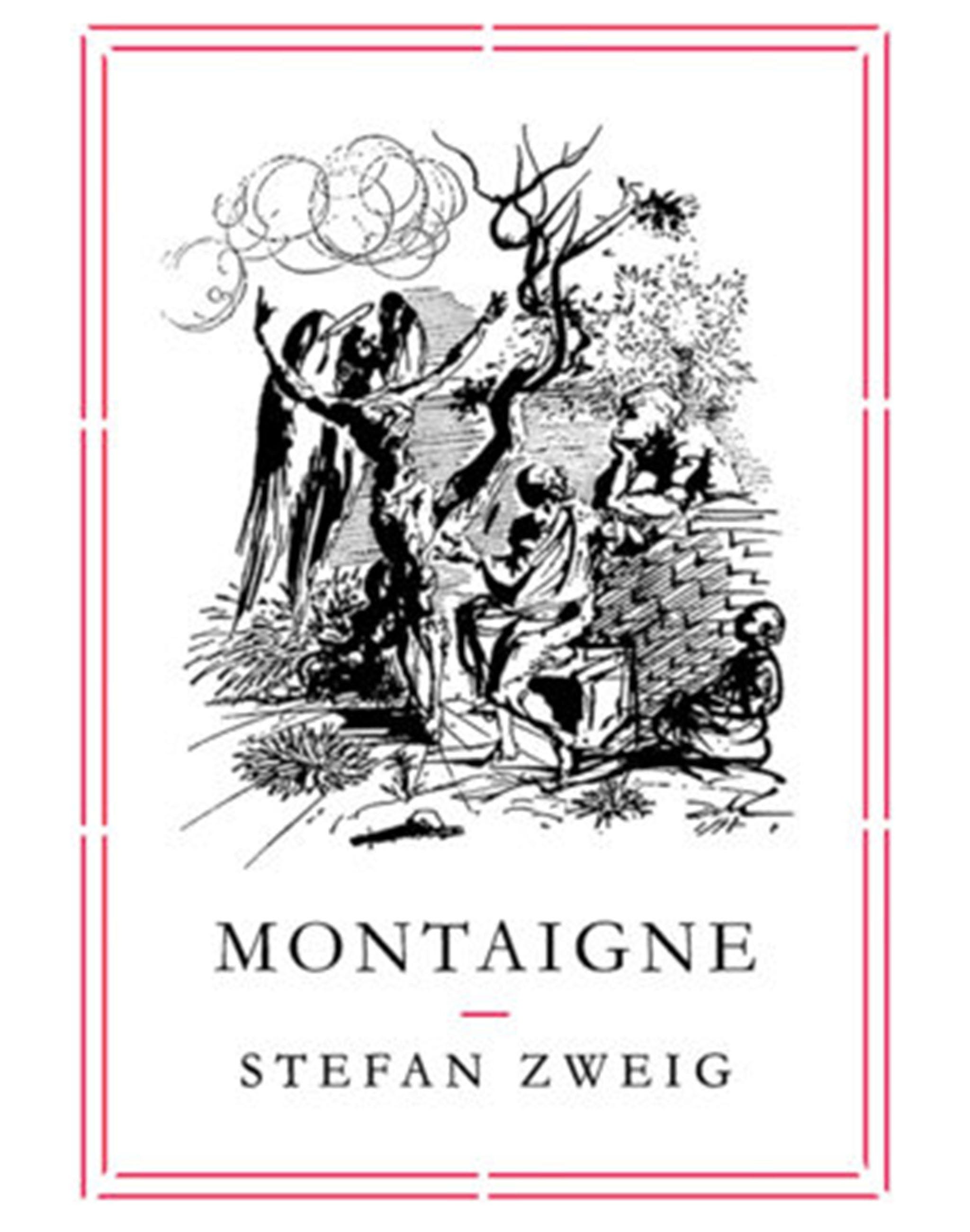
From this, Montaigne offers his first and perhaps most difficult lesson: freedom is not something we simply possess, but something we continually practice and protect. It’s a daily act of courage, requiring what he called the preservation of one’s arrière-boutique - a private back room, a space within us that remains untouched by external demands, where no state, faction, or ideology can enter uninvited. To sustain such a place – an inner intellectual and moral independence – demands more than conviction. It requires discipline, doubt, honesty and the courage to resist the easy comfort of belonging when it comes at the expense of integrity.
His second lesson is scepticism, not the paralysing kind, but a liberating one. Que sais-je? — what do I know? — he asks. This deceptively simple question is not a kind of modesty but a provocation, a demand that we examine the foundations of our certainty. Montaigne immunised himself against the dogmas that were consuming his contemporaries. In a world now shaped by endless streams of information and algorithmic echo chambers, this practice feels not only relevant but revolutionary. To pause and ask whether what we believe has been earned through reflection or merely absorbed through exposure — that is the Montaignian “Que sais-je?”
His third lesson emerges from a deep curiosity about human nature. Montaigne read not to show but to understand the varied and often contradictory ways in which people live and think. From this curiosity grew a form of tolerance that was neither passive nor indifferent, but grounded in the recognition that certainty is never one thing, never one voice, never one form.
History, for Montaigne, was an instruction manual in humility. One who knows how many forms human life has taken, how many contradictory truths have been held with equal conviction, finds it difficult to burn anyone at the stake. This is perhaps his most necessary gift to us: the reminder that rigid certainty has always been the first step toward cruelty.
Finally, Montaigne teaches restraint, a warning against surrendering the independence of one’s mind to ambition, ideology, or collective hysteria. He did not advocate withdrawal from the world as an escape, but as a way of maintaining balance, of engaging without becoming consumed. The external world will always demand our attention and allegiance, often with an urgency that feels impossible to ignore. We must engage with it, but never so fully that we lose the path back to ourselves.
If he were to speak to us now, he might observe, with his usual light irony, that we tend to notice the value of freedom only when it begins to slip away. The wiser course, he might say, is to notice it now, while we still can, and to defend it with the only weapon that cannot be confiscated: a mind that remains, stubbornly and gently, its own.
Thanks for reading Chronicles of a Liquid Society! This post is public so feel free to share it.
✍️ Written by

Newsletter
Stay updated with new articles.
No comments yet. Be the first to comment!