

The Neo-Luddite Who Was Right
Dave Eggersis an American author I’ve been following for a very long time. He’s very talented writer and polymath and unique author who has experimented with many different genres, novels, nonfiction, short stories, even children’s books. Somehow, he also finds the time to launch nonprofit organisations supporting literacy, education, and the arts. It’s hard to think of another contemporary writer whose work shows the same restless curiosity as Eggers’. Looking over the Eggers books I’ve read, I realised that A Heartbreaking Work of Staggering Genius has stayed with me, even after all these years. It’s unfortunate that the movie adaptation did not manage to capture the book’s energy and emotional charge.
Eggers has always had an unusual relationship with technology. While most of us were enthusiastically engaging with every new platform, every silly and addictive app, and every promise that technology would make us more connected, more productive, and somehow more fulfilled, Eggers was asking awkward questions. He seemed suspicious of the stories Silicon Valley was telling about itself, especially the convenient fiction that more connectivity meant a better society. At the time many of us dismissed him as a gloomy and nostalgic luddite. Funny how often the gloomy turn out to have simply been paying attention.
This scepticism found its clearest expression in his 2013 novel The Circle , a dystopian novel that exposes the shiny, supposedly friendly machinery of Big Tech. He shows how a company built on “connection” and “community” can quietly turn both into instruments of surveillance and control. The book examines the psychological pressure placed on employees to be constantly connected and permanently available and how that mindset spills into society at large, while he satirises the trend of politicians going “transparent,” broadcasting every waking moment as if visibility equals virtue. The result is a world where surveillance poses as progress, privacy becomes not only old fashioned but almost morally suspect, and corruption is supposedly solved by never turning the cameras off.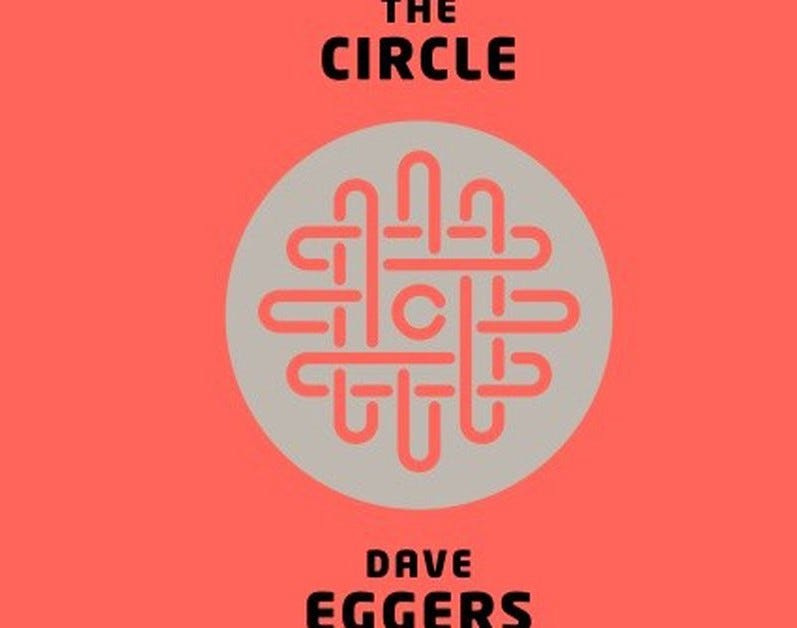
A few years later, Eggers wrote The Every , a sequel in which he pushes his critique of tech culture even further. If The Circle imagined a future in which transparency consumed privacy, The Every warns about something quieter but just as corrosive, the disappearance of the offline world. He shows how convenience, optimisation and “helpful” digital nudges can make real life feel superfluous, even obsolete. Privacy, boredom, messiness, wandering, uncertainty, and aimless conversation begin to look like endangered species rather than ordinary parts of being human. In these two books Eggers isn’t just criticising Big Tech, he’s stubbornly defending the analogue parts of life that algorithms can’t measure and companies can’t monetise. He famously refuses to use email, which is a charming eccentricity, provided that someone else is willing to handle all the boring but essential tasks of modern life, from confirming appointments to utility bills, forgotten passwords and the rest of the administrative stuff that clutter our lives.
We used to think, myself included, that Dave Eggers is a grumpy, neo-luddite complaining about everything technological. We were wrong. We now know he wasn’t being dramatic, he simply knew better.
In a recent Financial Times interview, I found a few excerpts I want to share today, and basically they’re the reason I’ve ended up writing about Dave Eggers at all.. The interview was about his new book,Contrapposto which has nothing to do with artificial intelligence or Silicon Valley, but among other things, he mentions that, after making yet another of his neo‑Luddite comments last year, he was invited to OpenAI to give a talk to the company’s employees. And he went. He spoke to 200 employees, and here are two of the things he told them:
“The effect of ChatGPT on educators’ lives is catastrophic. Whether you intended to do it or not, you’ve made every teacher’s life infinitely more difficult than it was two years ago. So just let that settle in …”
About students, he added:
“If students are using it to compose, which is the biggest tragedy of all, they’ll never learn to write. And their voice is stolen from them. They’ll never have the ability to say their truth and tell their own story. And that’s silencing an entire generation or two.”
Surprisingly, the OpenAI employees listened carefully and respectfully. They asked questions. By Eggers’ own account, it became a thoughtful and surprisingly moving conversation that lasted for an hour. And then he left. And OpenAI carried on doing what OpenAI does.
Thank you for reading this Old Trouble. If you liked this piece or found it useful, share it, or consider subscribing. Or buy me a virtual coffee as caffeine keeps this whole enterprise running.
✍️ Written by

Newsletter
Stay updated with new articles.
No comments yet. Be the first to comment!